
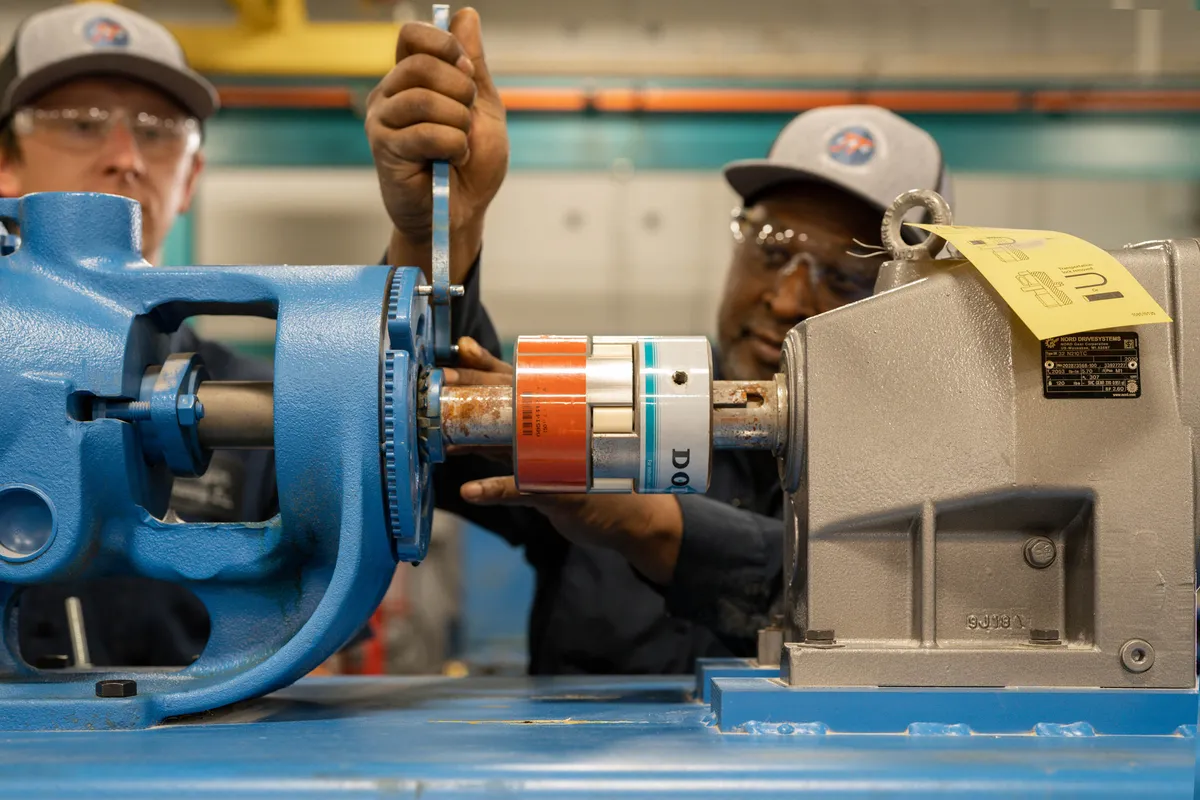
Viking Pump Troubleshooting: What to Check Before Replacement
Common Warning Signs, Troubleshooting Considerations, and When It May Be Time to Call an Experienced Pump Partner.
When a Viking Pump isn't performing the way it should, the first instinct may be to assume the pump has failed.
But a pump that isn't pumping, sounds different, is leaking, or isn't delivering the expected flow doesn't always mean the equipment needs to be replaced.
Changes in the process, operating conditions, pump condition, or surrounding system can all affect performance.
Taking a systematic approach to troubleshooting can help identify the problem, reduce unnecessary downtime, and determine whether the right solution is maintenance, repair, rebuilding, or replacement.
At Jack Tyler Engineering, we help industrial customers troubleshoot Viking Pumps and other industrial pumping equipment and determine the right next step for their application.
Start With the Symptoms
Before making any decisions about repair or replacement, start by identifying what has changed.
Common signs that a Viking Pump or pumping system may need attention include:
The pump isn't pumping
Flow has decreased
The pump is making unusual noise
Vibration has increased
A seal is leaking
Operating temperature has changed
Pump performance has changed
The pump is failing more frequently
These symptoms can have different causes, so identifying exactly what you're seeing, hearing, or measuring is an important first step.
1. Is the Pump Rotating Correctly?
One of the first questions to consider when a pump isn't performing as expected is whether it is rotating in the correct direction.
If you're troubleshooting a pump that isn't pumping or isn't producing expected flow, verify the applicable operating conditions and equipment requirements before assuming the pump itself has failed.
Always follow the manufacturer's instructions and appropriate site safety procedures when inspecting or working around operating equipment.
2. Has Anything Changed in the Process?
A pump may have been operating reliably for years, but that doesn't necessarily mean the application is still the same.
Consider whether anything has changed, such as:
The product being pumped
Product viscosity
Product temperature
Flow requirements
Pressure requirements
Operating schedule
Piping or system conditions
Even a change in the process can affect how pumping equipment performs.
This is especially important in applications involving viscous products.
3. Pay Attention to Noise and Vibration
Changes in sound or vibration can be useful indicators that something has changed.
A pump that suddenly sounds different or develops increased vibration deserves attention.
Don't automatically assume that the pump needs to be rebuilt or replaced.
Instead, consider what changed and whether additional inspection or troubleshooting can help identify the cause.
Regular observation and trending can help maintenance teams recognize developing problems before they become unexpected failures.
4. Don't Ignore Seal Issues
Seal leakage is another condition that should be evaluated rather than ignored.
The appropriate sealing arrangement depends on the pump, the fluid, operating conditions, and the application.
If you're experiencing repeated seal problems, it may be worth looking beyond the seal itself and evaluating the overall application and operating conditions.
A recurring problem may require a broader solution.
5. Consider the Product You're Pumping
Viking Pumps are used in a wide range of industrial applications, including many applications involving viscous fluids.
High-viscosity applications can include products such as:
Asphalt
Asphalt-related products
Oils
Adhesives
Polymers
Paints and coatings
Syrups and other viscous products
Applications involving 500 SSU and above are an important area where Viking Pumps can be well suited.
The specific pump, materials, sealing arrangement, and operating conditions still need to be evaluated for each application.
6. Don't Assume Replacement Is the Answer
When a pump is experiencing problems, replacing it may seem like the fastest solution.
But it isn't always the best one.
Depending on the condition of the equipment and the application, a Viking Pump may be able to be repaired or rebuilt.
The right decision can depend on factors such as:
Overall pump condition
Internal wear
Operating history
Application requirements
Availability of replacement components
Future operating conditions
Long-term cost
An evaluation can help determine whether repair, rebuilding, or replacement makes the most sense.
7. Know When to Bring in an Engineering Partner
Some pump problems are straightforward.
Others aren't.
If you've checked the obvious causes and the problem continues, it may be time to involve someone who can look at the equipment and the application.
Jack Tyler Engineering can help with:
Viking Pump selection
Application support
Troubleshooting
Pump service and repair
Pump rebuilds
Replacement parts
Repair vs. replace evaluations
Industrial pump applications
Servicing multiple pump brands
Our goal isn't simply to sell you another pump.
It's to help you understand the problem and find the right solution for the application.
Reliability and Safety Go Together
Unexpected pump failures can cost more than repair expenses.
They can affect:
Production schedules
Maintenance resources
Employee safety
Operating costs
Overall plant efficiency
That's why paying attention to changes in equipment performance and addressing problems appropriately is an important part of a strong reliability program.
Regular inspection, performance monitoring, data logging, and trending can help your team understand how equipment is performing over time.
And when something changes, having the right partner available can help you determine what to do next.
Need Help Troubleshooting a Viking Pump?
If your Viking Pump isn't pumping, isn't performing as expected, or is experiencing recurring problems, Jack Tyler Engineering can help.
Our team can help evaluate your application, troubleshoot equipment, and determine whether repair, rebuilding, replacement, or another solution makes sense.
Don't wait for a small problem to become an unexpected shutdown.
Need a more complete troubleshooting resource?
Download JTE's Free Viking Pump Troubleshooting & Maintenance Guide for practical information on troubleshooting, maintenance, applications, repair vs. replacement, and more.


